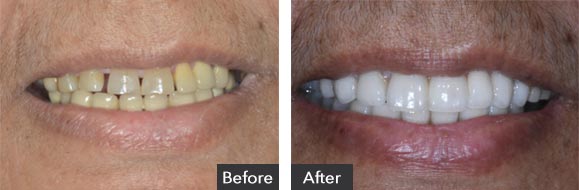
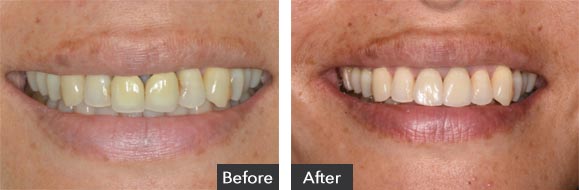
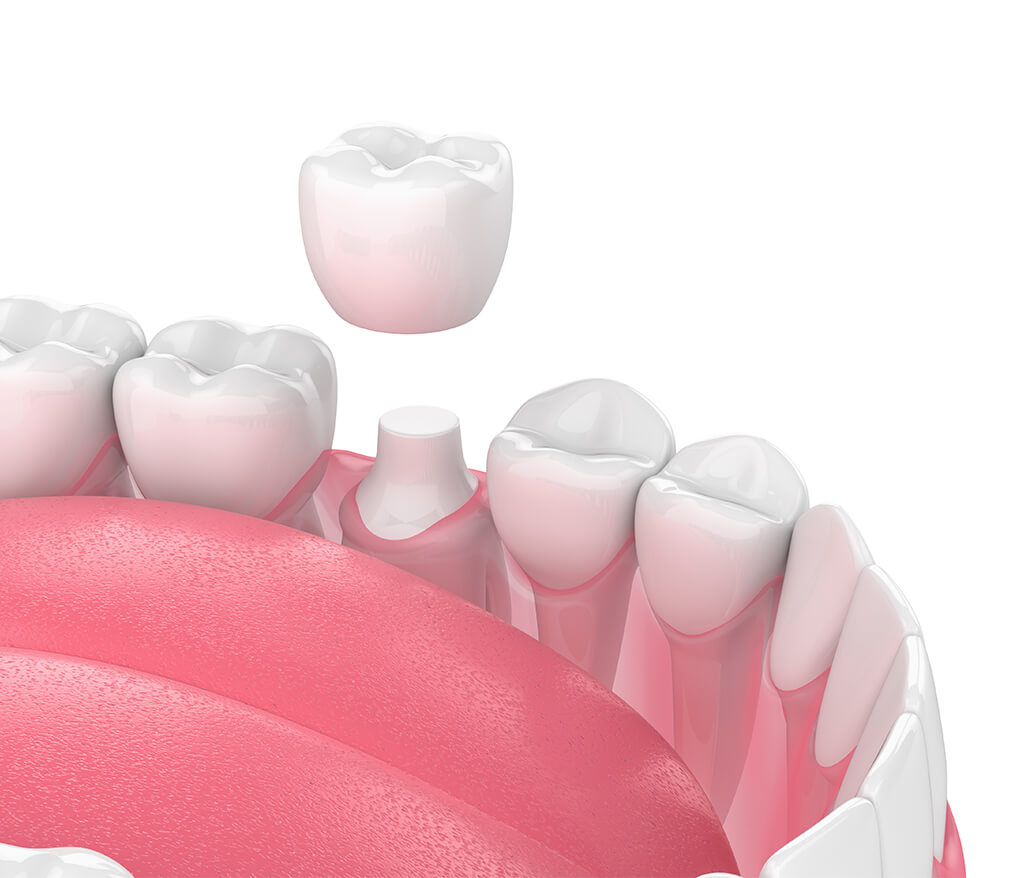
Fillings
We
are a mercury-free practice. However,
many people still have silver/mercury
fillings in their mouths from years
past. These fillings are not particularly
pleasing to the eye, and we know that
by unavoidable design, silver/mercury
fillings ultimately result in a weaker
tooth structure. Porcelain inlays and
Tooth Colored Restorations (onlays)
create fillings that are not only beautiful
(or unnoticeable) but also add strength
to weakened teeth. These restorations
are esthetically pleasing and very strong
thanks to new bonding technologies.
Disadvantages
of Silver fillings
Silver
fillings have many drawbacks. The edges
of the silver filling can wear down,
become weak or break. This results
in the tooth not being protected and
lets cavities get started once again.
With age, the metal of a silver filling
expands, contracts, and can split.
Silver
fillings contain 50 percent mercury.
They can corrode, leak and cause stains
on your teeth and gums.
Fortunately,
silver fillings can safely be replaced
with Tooth Colored Restorations.
Advantages
of Tooth-Colored Restorations
There
are many advantages to tooth colored
restorations. Resin onlays are bonded
to the teeth creating a tight, superior
fit to the natural tooth. Such
restorations can be used in instances
where much of the tooth structure has
been lost. The tooth remains intact
and stronger.
Since
the resin used in tooth colored restorations
contain fluoride this can help prevent
decay. The resin wears like natural
teeth and does not require placement
at the gum line, which is healthier
for your gums!
The
result is a beautiful smile!
Replacing
Silver fillings with a Tooth Colored
Restoration
You
can have your silver fillings replaced
with Tooth colored restorations (onlays).
This process requires two appointments.
Your
First Appointment
-
The old filling is removed and any
additional decay.
- An
impression is made of your teeth.
A model of your teeth is made and
sent to the lab.
- A
temporary onlay is placed on the tooth.
At
the Lab
A
resin is carefully placed into the model
of your teeth. It is then designed to
look natural.
Your
Second Appointment
- The
temporary onlay is removed.
- A
conditioning gel is placed on your
tooth to prepare it for the new onlay.
- Bonding
cement is placed on the tooth and
a high intensity light bonds the resin
to the tooth.
- The
tooth is then polished.
Your
teeth are restored to a natural look
and feel, they are stronger and the
tooth is protected!
Back
to Top
Sealants
Highly
effective in preventing decay on the
biting surfaces of your chewing teeth,
sealants are a simple procedure in which
a tooth-colored acrylic "coating"
is painted onto the surface of the tooth.
This effectively "seals" the
deep grooves acting as a barrier, protecting
enamel from plaque and acids.
Sealants
protect the depressions and grooves
of your teeth from food particles and
plaque that brushing and flossing can't
reach.
Easy
to apply, sealants take only a few minutes
to seal each tooth. Sealants hold up
well under the force of normal chewing
and can last several years before a
reapplication is needed.
Children
and adults can benefit from sealants
in the fight against tooth decay.
Back
to Top
Veneers
What
are porcelain veneers?
Porcelain
veneers are thin shells of ceramic that
bond directly to the front and top surfaces
of the teeth. They are an ideal choice
for improving your smile and have become
increasingly popular due to their simplicity
and versatility. With veneers as an
alternative, there is no reason to put
up with gaps between your teeth, teeth
that are stained, badly shaped or crooked.
A veneer placed on top of your teeth
can correct these maladies, simply and
quickly, to help you achieve a beautiful
smile!
Will
they look like normal teeth?
When
bonded to the teeth, the ultra-thin
porcelain veneers are virtually undetectable
and highly resistant to coffee, tea,
or even cigarette stains. For strength
and appearance, their resemblance to
healthy, white tooth enamel is unsurpassed
by other restorative options. Because
they are thin, light can shine through
them and they take on the natural color
of the underlying tooth.
How
durable are porcelain veneers?
With
proper care, porcelain veneers will
brighten your smile for well over a
decade.
Design Dental Group will ensure that
your veneers are crafted from the highest
quality porcelains and are bonded with
the most advanced and proven materials
available.
The
Procedure
This
procedure will require three appointments:
- Diagnosis
and treatment planning
- Preparation
- Bonding
Diagnosis
and treatment planning
You
will want to take an active role in
planning your smile design. Your doctor
will review the corrective limitations
of this procedure and help you plan
your new smile.
Preparation
The
second appointment will take one to
two hours. Although the porcelain veneer
is very thin, the teeth are lightly
buffed to allow for the added thickness.
Approximately one half of a millimeter
of tooth is removed. This may require
little or no local anesthesia.
Then
a mold is taken of the teeth and sent
to the lab for fabrication. If the teeth
are too unsightly a temporary veneer
can be placed at this time. The veneer
should be ready in approximately one
to two weeks.
Bonding
At
the time of your third appointment,
your doctor will first place the veneer
on your teeth with water or glycerin
to check their fit and color. At this
point the color of the veneer can still
be adjusted by the shade of the cement
used to adhere it. Once the color is
determined, and the veneer is ready
to be applied, the tooth is cleansed
with specific chemicals to achieve a
bond. A special cement is placed between
the teeth and the veneer and a visible
light beam is used to harden the cement.
This appointment takes approximately
one to two hours.
Care
and follow up
Brush
and floss daily. Return for a follow-up
visit after one to two weeks.
Maintenance
of your new Veneers
Brush
and floss as you normally would. Don't
be afraid that you will damage your
veneers by brushing and flossing. Non-abrasive
toothpaste is recommended. A good home
care regimen will insure the best esthetic
success of your veneer.
You may experience some sensitivity
to hot and cold after placement of your
veneer. This is due to the amount of
enamel left on the tooth after preparation.
Sensitivity is totally normal and should
dissipate after one to two weeks. If
sensitivity persists please call the
office.
If
you are a known clencher (bruxer), please
be sure to let us know. Your doctor
may recommend a soft night guard for
you to wear to minimize stress placed
upon your teeth while you sleep.
We
hope that your new veneers fulfill your
esthetic goal. With proper home care
and scheduled visits, they are sure
to provide you with a beautiful smile
for years to come.
Back
to Top
Inlays
/ Onlay
When
over 1/2 of the tooth's biting surface
is damaged your dentist at Design Dental
Group will often use an inlay or onlay.
What
are inlays and onlays?
Inlays
and onlays can be made of porcelain,
gold, or composite resin. These pieces
are bonded to the damaged area of the
tooth. An inlay, which is similar to
a filling, is used inside the cusp tips
of the tooth; an onlay is a more substantial
reconstruction, similar to the inlay
but extending out over one or more of
the cusps of the tooth.
Traditionally,
gold has been the material of choice
for inlays and onlays. In recent years,
however, porcelain has become increasingly
popular due to its strength and color,
which can potentially match the natural
color of your teeth.
How
are they applied?
Inlays
and onlays require two appointments
to complete the procedure. During the
first visit, the filling being replaced
or the damaged or decaying area of the
tooth is removed, and the tooth is prepared
for the inlay or onlay. An impression
of the tooth taken and sent to a lab
for fabrication. Your doctor will then
apply a temporary sealant on the tooth
and schedule the next appointment.
At
the second appointment, the temporary
sealant is removed. Your doctor will
then make sure that the inlay or onlay
fits correctly. If the fit is satisfactory,
the inlay or onlay will be bonded to
the tooth with a strong resin and polished
to a smooth finish.
Considerations
Traditional
fillings can reduce the strength of
a natural tooth by up to 50%. As an
alternative, inlays and onlays, being
bonded directly onto the tooth using
special high-strength resins, can actually
increase the strength of a tooth by
up to 75%. As a result, they can last
from 10 to 30 years. In some cases,
where the damage to the tooth is not
extensive enough to merit an entire
crown, onlays can provide a very good
alternative.
Back
to Top
Bonding
Bonding
can be used as a restorative procedure
for teeth that are chipped, cracked,
discolored or misarranged, and is an
alternative to veneers.
How
does it work?
The
tooth is prepared for the procedure
by lightly etching the surface and applying
a bonding liquid. Once the liquid sets,
a plastic resin is applied and sculpted
into the desired shape by the dentist.
Once set, the resin is trimmed, smoothed
and polished to a natural appearance.
Considerations
The
bonding procedure can often be completed
in a single office visit, and can improve
the appearance of a tooth significantly.
However, since the plastic resin used
is not as strong as your natural tooth
enamel, it is more likely to stain,
chip or break than natural teeth. Bonding
typically lasts three to five years
before repair is needed.
Back
to Top
Extractions
You
and your doctor at Newport Beach Design
Dental Group may determine that you
need a tooth extraction for any number
of reasons. Some teeth are extracted
because they are severely decayed; others
may have advanced periodontal disease,
or have broken in a way that cannot
be repaired. Other teeth may need removal
because they are poorly positioned in
the mouth (such as impacted teeth),
or in preparation for orthodontic treatment.
The
removal of a single tooth can lead to
problems related to your chewing ability,
problems with your jaw joint, and shifting
teeth, which can have a major impact
on your dental health.
To
avoid these complications, in most cases,
your dentist will discuss alternatives
to extractions as well as replacement
of the extracted tooth.
The
Extraction Process
At
the time of extraction your doctor at
Newport Beach Design Dental Group will
need to numb your tooth, jawbone and
gums that surround the area with a local
anesthetic.
During
the extraction process you will feel
a lot of pressure. This is from
the process of firmly rocking the tooth
in order to widen the socket for removal.
You
feel the pressure without pain as the
anesthetic has numbed the nerves stopping
the transference of pain, yet the nerves
that transmit pressure are not profoundly
affected.
If
you do feel pain at any time during
the extraction please let us know right
away.
Sectioning
a Tooth
Some
teeth require sectioning. This is a
very common procedure done when a tooth
is so firmly anchored in its socket
or the root is curved and the socket
can't expand enough to remove it. The
doctor simply cuts the tooth into sections
then removes each section one at a time.
After
Care
Bleeding
Some
bleeding may occur. Placing a piece
of moist gauze over the empty tooth
socket and biting down firmly for 45
minutes can control this.
Blood
clots that form in the empty socket.
This is an important part of the healing
process and you must be careful not
to dislodge the clot.
- Avoid
rinsing or spitting for 24 hours after
the extraction.
- Avoid
use of a straw, smoking carbonated
or hot liquids.
Swelling
If
swelling occurs you can place ice on
your face for 20 minutes and off for
20 minutes. Repeat this cycle as you
feel necessary for up to 24 hours.
Pain
and Medications
If
you experience pain you might use non-prescription
pain relief medications such as acetaminophen
or ibuprofen.
Eating
For
most extractions just make sure you
do your chewing away from the extraction
site. Stay away from hot liquids and
alcoholic beverages for 24 hours.
A liquid diet may be recommended for
24 hours.
Brushing
and Cleaning
After
the extraction avoid brushing the teeth
near the extraction site for one day.
After that you can resume gentle cleaning.
Avoid commercial mouth rinses, as they
tend to irritate the site. Beginning
24 hours after the extraction you can
rinse with salt water (1/2 teaspoon
in a cup of water) after meals and before
bed.
Dry
Socket
Dry
socket is when a blood clot fails to
form in the socket where the tooth has
been extracted or the clot has been
dislodged and the healing is significantly
delayed.
Following
the post extraction instructions will
reduce the chances of developing dry
socket. Dry sockets manifest themselves
as a dull throbbing pain, which doesn't
appear until three to four days after
the extraction. The pain can be
moderate to severe and radiate from
the extraction area. Dry socket may
cause a bad taste or bad breath and
the extraction site appears dry.
Your
dentist/surgeon at Design Dental Group
will apply a medicated dressing to the
dry socket to sooth the pain.
Healing
After
a tooth has been extracted there will
be a resulting hole in your jawbone
where the tooth was. In time,
this will smooth and fill in with bone.
This process can take many weeks or
months. However after 1- 2 weeks you
should no longer notice any inconvenience.
Socket preservation is indicated to
preserve the bone in the extraction
site.
Replacing
teeth with:
Dental Implants (link to dental implant
page)
Bridges (Link to bridges page).
Back
to Top
Bleaching
Having
a beautiful smile may be even easier
than you think. Many people achieve
the look they've been dreaming of with
our simple "bleaching" procedure.
It's
safe, quick, and inexpensive. Just let
us know at any appointment if you would
like to begin bleaching. You can lighten
only your upper teeth or both the upper
and lower, depending on how much of
each shows when you talk and smile.
In
only a day or two your custom bleach
splints will be ready for you to pick
up. We provide you with a special bleaching
agent that you put into the clear, almost
invisible splints. With only a few hours
of wear per day, our special bleaching
agent bubbles stains right out of your
enamel in a very short time without
altering tooth structure or existing
dental work in any way. When your teeth
reach the brightness you want, only
occasional treatment is needed to maintain
your new smile. We'll want to take "after"
photos at your next appointment.
Dental
bleaching can be used to correct many
tooth discolorations. These discolorations
may have been caused by staining, aging,
or chemical damage to teeth. Using the
latest in bleaching technology, we can
offer a safe method for creating a beautiful,
"brilliant" smile. In cases
of extreme tooth discoloration, crowns
or veneers may be the only choice. But
because of the low cost of bleaching
treatments, bleaching is nearly always
worth a solid try.
 |
 |
|
Before
|
After
|
Key
Benefits
- Corrects
brown, yellow and mottled tooth staining
- Works
on people of all ages.
- Is
a near permanent solution for a "dull"
smile, restoring brightness and bringing
a smile alive.
How
is it done?
An
impression is taken to make a specialized
"mouthguard" or "stent"
to hold the bleach against the teeth.
The material is used each night for
about 3-4 hours for a week or two, after
which significant whitening will occur.
In some cases, the change is nothing
short of brilliant. For confidence in
appearance, bleaching technology offers
improvements in yellowing, aging or
stained teeth. For very severely stained
teeth, crowns or veneers may be more
appropriate.
Considerations
Over-the-counter
bleaching agents are available at drug
stores and pharmacies. However, since
these products can harm the gums and
teeth, it's better to use products that
our practice recommends.
Zoom
Whitening
If
you prefer teeth that are immediately
whiter right now or you would rather
whiten your teeth over a few nights
while you sleep, your doctor has your
answer with Zoom! The Zoom! In-Office
Whitening System uses proprietary technology
to whiten your teeth an average of eight
shades* in a little over an hour while
you relax at your dentist's office.
It's ideal for anyone who wants immediate
results. The Zoom! Take-Home Whitening
System uses a revolutionary patent-pending
gel to whiten your teeth an average
of six shades in three nights. * And
you may go even lighter with additional
applications. Start on Friday and by
Monday you'll have a whole new smile.
Strips
or paint-on gels are a waste of time.
Get your teeth whiter in a fraction
of the time with Zoom
What
is Zoom! tooth whitening?
Zoom!
is a bleaching process that lightens
discoloration of enamel and dentin.
What
can cause tooth discoloration?
There
are many causes. The most common include
aging and consumption of staining substances
such as coffee, tea or tobacco. During
tooth formation, consumption of tetracycline,
certain antibiotics or excessive fluoride
may also cause tooth discoloration.
Who
may benefit from tooth whitening?
Just
about anyone can benefit from tooth
whitening. However, treatment may not
be as effective or some as it is for
others. Upon an oral exam, your doctor
can determine if you are a candidate
for this procedure, including a shade
assessment.
Is
tooth whitening becoming more popular?
Absolutely!
A bright, beautiful smile can make a
big difference. The Zoom! Whitening
System makes it easier and faster than
ever before.
Is
tooth whitening safe?
Yes,
research and clinical studies indicate
that whitening teeth under the supervision
of a dentist is safe. In fact, many
dentists consider whitening the safest
cosmetic dental procedure available.
As with any tooth whitening product,
Zoom! is not recommended for children
under 13 years of age and pregnant or
lactating women.
Do
the results last a long time?
By
following some simple post whitening
care instructions, your teeth will always
be lighter than they were before. We
recommend flossing, brushing twice daily
with Zoom! Whitening Toothpaste, and
touch-ups with Zoom! take-home gel.
These are professional formula products
designed specifically to keep your teeth
their brightest. They are available
through our office.
Is
there any difference between over-the-counter
tooth whiteners and Zoom!
Yes!
Consulting your doctor is always the
first step to whitening your teeth safely.
Over-the-counter tooth whitening strips,
brush-on gels and toothpastes take weeks
or months to whiten your teeth just
a few shades. Zoom! is clinically proven
to whiten your teeth eight shades in
one hour or six shades in just one weekend
How
does the Zoom! In-Office System work?
The
Zoom! light-activated whitening gel's
active ingredient is Hydrogen Peroxide.
As Hydrogen Peroxide is broken down,
oxygen enters the enamel and dentin,
bleaching any colored substance while
keeping the structure of the tooth unchanged.
The Zoom! light aids in activating the
Hydrogen Peroxide and helps it penetrate
the surface of the tooth.
Is
the Zoom! In-office procedure painful?
No.
During the procedure, patients can actually
watch television or listen to music.
Many fall asleep.
Are
there any side effects?
Some
people experience temporary increased
tooth sensitivity to cold during treatment.
These symptoms disappear within 1-3
days after interruption or completion
of the treatment.
How
long is the procedure?
The
Entire procedure takes just over one
hour. The procedure begins with a preparation
period followed by one hour of bleaching.
A five-minute fluoride treatment completes
the procedure (we recommend a cleaning
prior to the actual Zoom! Whitening
session).
How
long does Zoom! Take-home Whitening
take?
The
Zoom! take-home gel is designed to be
worn between four and eight hours per
application. Your dental professional
at Design Dental Group will advise you
on how long you should wear each application.
A recent study showed that you can achieve
an average improvement of six shades*
after just three nights of use. Design
Dental Group will help you determine
how many applications are right for
you.
How
is the Zoom! Take-home System different
from the Zoom! In-Office System?
The
main difference between the two systems
is that you use the Zoom! Take-home
System in the convenience of your own
home over a few nights. The Zoom! In-Office
System is performed entirely in the
office.
Back
to Top
Bridges
All
of your teeth play an important role
in speaking, chewing and in maintaining
proper alignment of other teeth. Tooth
loss doesn't necessarily have to occur
as you age, but if you do lose teeth,
they must be replaced to maintain proper
function of your mouth. Fortunately,
there are options for correcting tooth
loss.
Options
A
bridge is a device used to replace missing
teeth that attaches artificial teeth
to adjacent natural teeth, called abutment
teeth. Bridges are either permanently
attached (fixed bridges), or they can
be removable.
Fixed
bridges are applied by either placing
crowns on the abutment teeth or by bonding
the artificial teeth directly to the
abutment teeth. Removable bridges
are attached to the teeth with metal
clasps or by precision attachments.
If
you're missing one or more teeth, you
may be aware of their importance to
your appearance and dental health. Your
teeth work together for many daily functions
from eating to speaking. With missing
teeth, it's difficult to do these things.
Missing teeth can and should be replaced.
Fixed bridges are a great way to restore
your dental health and appearance.

What
exactly is a bridge or fixed partial
denture?
A
bridge (fixed partial denture) is a
device, which fills the gap where teeth
are absent. Fixed bridges are bonded
into place and can only be removed by
a dental professional. Removable bridges,
as the name implies, can be taken out
and cleaned. Fixed bridges offer more
stability than their removable counterparts.
Why
do I need a bridge?
Oral
functionality and appearance are important
reasons for wearing a bridge. A bridge
helps support your lips and cheeks.
The loss of a back tooth may cause your
mouth to sink and your face to look
older.
Dental
health is the most important reason
for a bridge. Teeth were designed to
complement each other. Unusual stresses
are placed on the gums and other oral
tissues when teeth are missing, causing
a number of potentially harmful disorders.
Increased
risk of gum disease has proven to be
one of the worst side effects of missing
teeth and can be minimized with a bridge.
Missing
teeth can cause speech disorders as
they are used to make many of the sounds
we use to speak clearly.
How
is a bridge attached?
The
attachment procedure usually takes two
or three appointments to complete. At
the first appointment your prosthodontist
or general dentist will prepare the
teeth on either side of the gap by removing
a portion of the enamel and dentin.
Since
the bridge must be fabricated very precisely
to ensure correct bite and to match
the opposing tooth, impressions of the
teeth are taken and sent to a lab where
the bridge will be constructed.
Fixed
bridges are typically cemented to the
natural teeth next to the space left
by the missing tooth. A pontic (false
tooth) replaces the lost tooth. Crowns,
which are cemented onto the natural
teeth, provide support for the bridge.
What
materials are used?
Bridges
can be constructed from gold alloys,
non-precious alloys, porcelain, or a
combination of these materials. Porcelain
is often bonded to either precious or
non-precious metal.
How
do I take care of my bridge?
A
strict regimen of brushing and flossing
will keep the bridge and surrounding
teeth clean. This is of critical
importance as the bridge relies on the
neighboring teeth for support.
Back
to Top
Crowns
Newport
Beach Design Dental Group is the art
of dental science. Most dentistry
looks like dentistry. Our goal
is to provide dentistry that is undetectable.
We replace existing crowns and fillings
with restorations that look and feel
like your natural teeth.
Where
damage to a person's teeth is extreme,
and apparently beyond repair, we can
use porcelain or porcelain "pasted
on gold" crowns to make the smile
appear "as new". This is an
extremely reliable technique for repairing
the most severe of dental problems,
even permanently replacing missing teeth
to offer a complete smile and a functional
bite. We are renowned for the quality
of our work and the fantastic changes
we make for people using this technology.
These treatments are used for a long
lasting correction of major dental problems.
It is usual for these treatments to
last for 20 to 30 years, which is as
close to permanent as dental treatment
can get.
How
long does it take?
Fitting
a crown requires at least two visits
to our office. Initially, we will remove
decay, shape the tooth, and fit it with
a temporary crown of either plastic
or metal.
On
the subsequent visit we will remove
the temporary crown, and then fit and
adjust the final crown. Finally,
we will cement the crown into place
and you have a new beautiful looking
tooth.
Key
Benefits
- Replaces
missing teeth
- Offers
support to misshapen teeth or badly
broken teeth
- Looks
completely natural
- Fixes
"smile" and functional chewing
problems.
What
are the capabilities of crowns?
Crown
and bridgework is a very reliable solution
for major dental problems caused through
accidents, diseases or wear and tear.
Major problems can usually be corrected
using these techniques. Material used
in these repairs is either high-grade
porcelain, or porcelain bonded to gold.
A higher strength of the porcelain and
gold materials is recommended to treat
the most serious of dental problems.
Where accidental damage has occurred,
resulting in lost teeth, or where teeth
have broken away through excessive wear,
or as the result of old fillings breaking,
crowns and/or bridges can be used as
a long-term solution.
Many
people have unexplained pain from filled
back teeth, which is usually due to
hairline cracks in the chewing part
of the tooth. Placing crowns on these
teeth relieves the pain and allows a
return of full dental function for these
teeth. In front teeth, older fillings
can both weaken the teeth and cause
"appearance" problems due
to staining or chipping. Porcelain crowns
and bridges are suitable in cases where
porcelain veneers are not. In teeth
with root canal fillings, crowns can
prevent breakage.
Back
to Top
Laughing
Gas (see Nitrous Oxide)
Source:
Dentalfind
Nitrous
Oxide, N2O, also called laughing gas,
is a colorless gas with pleasant, sweetish
odor and taste, which when inhaled produces
insensibility to pain preceded by mild
hysteria or laughter.
Nitrous
oxide was discovered by the English
chemist Joseph Priestley in 1772, but
was named nitrous oxide by Humphry Davy.
The principal use of nitrous oxide is
as an anesthetic in surgical operations
of short duration as prolonged inhalation
of nitrous oxide can cause death.
Nitrous
oxide is prepared by the action of zinc
on dilute nitric acid, by the action
of hydroxylamine hydrochloride on sodium
nitrite, and, most commonly, by the
decomposition of ammonium nitrate.
Nitrous
oxide has very distinct characteristics
and when inhaled, nitrous produces a
variety of physical effects including:
- Disorientation
- Fixated
vision
- Throbbing
or pulsating auditory hallucinations
- Similarly
pulsating visual hallucinations
- Increased
pain threshold
- Deeper
mental connections
The
physiological effects of using nitrous
oxide last approximately a minute for
a lungful of nitrous and then mainly
dissipate. Some residual effects may
last up to several minutes later. Nitrous
gas works by infusing into the membranes
of the body and produces an anesthetic
effect.
Nitrous
oxide is used in roughly one third of
dental practices in the United States,
especially to allay anxiety that many
patients may have toward dental treatment,
and it offers some degree of painkilling
ability. The benefits of nitrous oxide
are many, and the risks are few. The
gas is administered with a comfortable
mask placed over the nose, and the patient
is instructed to breathe in through
the nose and out through their mouth.
As a precaution, patients should not
eat anything for about two hours prior
to use of the gas. The patient begins
to feel a pleasant level of sedation
in anywhere from 30 seconds to three
or four minutes. The cheeks and gums
will also begin to feel numb in about
a third of the patients.
After
the gas is adjusted to the appropriate
dose, and the patient is relaxed and
sedated, the dentist can comfortably
give the anesthetic injection (if needed)
to the patient, and then proceed with
dental treatment. After the treatment
is completed, the patient is given pure
oxygen to breathe for about five minutes,
and all the effects of sedation are
usually reversed. Unlike IV sedation
or general anesthesia, the patient can
almost always leave the office by themselves,
without an escort.
Nitrous
oxide has few side effects although
high doses can cause nausea in some
patients, and about 10% of patients
do not benefit from it. Patients that
are claustrophobic or have blocked nasal
passages cannot use nitrous oxide effectively.
Nitrous oxide is one of the safest anesthetics
available.
Back
to Top
Laser
Dentistry
For
patients who do not look forward to
needles, drilling, or numbness, Laser
Dentistry, may be the right choice.
Laser
dentistry is one of dentistry's latest
advances. The Laser delivers energy
in the form of light. Depending
on the intended result, this energy
travels at different wavelengths and
is absorbed by a "target."
In dentistry, these targets can be enamel,
decay, gum tissue, or whitening enhancers.
Each one absorbs a different wavelength
of light while reflecting others. Laser
dentistry can be used for both tooth
and soft tissue related procedures.
Often times no local anesthesia is required.
Unlike the dental drill with laser dentistry
there is no heat or vibration, making
the procedure quite comfortable for
most patients. For soft tissue
(surgical) procedures it eliminates
the need for suturing and healing is
much faster.
Lasers
can be used to diagnose cavities. They
can find hidden decay in teeth in early
stages, and in some cases the decay
can be reversed through hygiene and
fluoride treatment and may never need
filling.
Areas
of dental care that benefit from laser
technology:
- Cavity
diagnosis and removal
- Curing,
or hardening bonding materials
- Whitening
teeth
- Periodontal,
or gum related care
- Pediatric
procedures.
- Apthous
Ulcer treatment (canker sore)
- Frenectomy
(tongue-tie release) without anesthesia
or sutures
- Root
Canal and apiecopectomies
- Crown
lengthening, gingovectomy and other
gum corrections
Click
here for a complete list of FDA
cleared procedures
Dental
lasers have been shown to be safe and
effective for treating both children
and adults.
Back
to Top
Gum
Disease Laser Therapy
Periodontal
or gum disease happens when bacteria
gets below the gum line and the attachment
between the gum and tooth is lost.
Three out of four Americans have some
form of periodontal disease and only
3 out of 100 will ever get treated before
its too late.
Gum
disease is a silent, chronic, painless
and communicable bacterial infection
that often goes undetected or ignored
until severe gum and bone destruction
is unbearable and no longer able to
be ignored. Left untreated gum
disease can cause tooth loss and traditional
treatment can hurt.
The
latest conservative gum therapy uses
a laser. The laser gently disinfects
and evaporates diseased tissues from
around the tooth and inside the gum
pocket. This treatment interrupts the
bacterial destruction of the tissues
and bone giving the gum pocket a chance
to heal. Systematic repeated visits,
generally 2-8, allow the gum pocket
to be disease-free and sometimes allow
tissues to reattach to the pocket back
to a normal or near-normal depth. This
new laser therapy is gentle, less painful,
has a quick recovery. While surgery
may still be indicated for severely
advanced periodontal cases, laser therapy
is a much more conservative, effective
and comfortable option for beginning
to moderate periodontal cases.
Back
to Top
Laser
Smile
LaserSmile®
is the most advanced in-office accelerated
tooth whitening system available today.
It creates a more aesthetic appearance
by reversing discoloration of tooth
enamel. LaserSmile® combines an
activation gel with the laser's unique
characteristics. The primary ingredient
in the LaserSmile® gel has been
used in teeth whitening for over 100
years. This proven system will give
you a more noticeable whiter smile.
The
procedure is quick and easy. In just
one visit to our office you can sit
back, relax and in 60 minutes you will
leave with the brightest smile you have
ever had.
Fast,
Safe and Effective! LaserSmile®
Back
to Top
Intraoral
Camera
Many
patients, especially younger patients,
are very familiar with the latest technology
and are more comfortable with the high
tech practice. Computers and TV screens
are their primary method of information
processing.
Design
Dental Group utilizes intraoral camera
technology that helps enhance your understanding
of your diagnosis. An intraoral
camera is a very small camera. In some
cases, an intraoral camera is just a
few millimeters long. An intraoral
camera allows our practice to view clear,
precise images of your mouth, teeth
and gums, in order for us to accurately
make a diagnosis. With clear,
defined, enlarged images, you see details
that may be missed by standard mirror
examinations. This can mean faster diagnosis
with less chair-time for you!
Intra
oral cameras also enable our practice
to save your images in our office computer
to provide a permanent record of treatments.
These treatments can be printed as for
you, other specialists, and your lab
or insurance companies.
Back
to Top
Precision
Dentistry
When
you seek care at our office, you are
assured that Design Dental Group utilizes
the latest in technology to enhance
the quality and fit for your dental
care.
Our practice high power microscopes
to enhance the precision of patient
care.
Dentistry is micro-surgery. Using
a similar microscope that an ophthalmologist
uses enables us to create dental restorations
with incredibility precise fit and finish.
You just can't fulfill that level of
care with the naked eye.
In
addition to allowing precise, close
up work, the microscope directs a beam
of light directly on the teeth, minimizing
glare to you.
Many dentists use air-driven "hand-pieces"
(the dental term for "drills").
While acceptable for many procedures,
these "whiney sounding" air
powered hand pieces all have a degree
of non-concentricity; they do not
rotate perfectly smoothly.
For the most precise aspects of restorative
procedures, we use electric hand-pieces.
This results in extraordinarily precise
interfaces between your tooth and your
new restoration (crown, veneer, or filling).
This
will bring more comfort to you as well.
With a more precise tool, there is less
vibration and less noise!
Back
to Top
Digital
Imaging
Your
dental professional at Newport Beach
Design Dental Group chooses carefully
which and when radiographs are taken.
There are many guidelines that we follow.
Radiographs allow us to see everything
we cannot see with our own eyes. Radiographs
enable us to detect cavities in between
your teeth, determine bone level, and
health of bone. We can also examine
the roots and nerves of teeth, diagnose
lesions such as cysts or tumors, as
well as assess damage when trauma occurs.
Dental
radiographs are invaluable aids in diagnosing,
treating, and maintaining dental health.
Exposure time for dental radiographs
is extremely minimal. Design Dental
Group utilizes Digital Imaging Technologies
within the office. With digital imaging,
exposure time is about 50 percent less
when compared to traditional radiographs.
Digital imaging can also help us retrieve
valuable diagnostic information.
We may be able to see cavities better.
The
advantages of digital imaging enables
us to not only store patient images,
but also enables us to quickly transfer
them to appropriate specialists or insurance
companies.
Digital
X-Rays
Digital
X-rays offer more precision since we
view the image on a computer monitor,
instead of holding up a 35mm film up
to the light. Digital X-rays results
in 1/6th the radiation exposure to you.
Back
to Top
Glossary
of Dental Terms
ABSCESS - a local infection.
A Severe decay, periodontal disease,
or trauma are causative factors.
It is characterized by swelling and
pain. If an abscess ruptures, it
will be accompanied by sudden relief
from pain due to a reduction in pressure.
A foul taste may also be noticed.
ABUTMENT - a term used to denote
the teeth on either side of a missing
tooth.
ACRYLIC RESIN - the plastic
widely used in dentistry to make dentures.
ACTIVE ERUPTION - the emergence
of the tooth from its position in the
jaw.
ADHESION - the sticking together
of unlike substances
ADJUSTMENT - a modification made
upon a dental prosthesis after it has
been completed and inserted into the
mouth.
AEROBIC BACTERIA - bacteria which
grow in oxygen rich environments; in
the oral cavity the bacteria are
found outside the sulcus.
AFFERENT - nerves that
carry sensory messages toward the brain.
AGAR - a gelatin like substance
obtained from seaweed; used in impression
materials.
ALGINATE - an impression material
used by dentists for making stone models.
ALVEOLECTOMY - an operation where
portions of the alveolar bone are removed.
ALVEOLAR BONE - the bone surrounding
the root of the tooth; loss of this
bone is typically associated with severe
periodontal disease.
ALVEOLAR CREST - the highest
portion of alveolar bone.
ALVEOLAR EMINENCE - outline of
the root on the facet portion of the
bone.
ALVEOLAR PROCESS - the portion
of the mandible or maxilla that surrounds
the root of a tooth.
ALVEOLUS - the bony socket in
which the root of the tooth sits.
AMALGAM - or silver filling;
an alloy in which one of the metals
is mercury. Below are the approximate
percentages of the component elements:
ANAEROBIC
BACTERIA - bacteria that do not
need oxygen to grow; they are
generally associated with periodontal
disease.
ANODONTIA - the developmental
absence of teeth.
ANTIBIOTIC - substance
produced by or derived from bacteria
which is able to inhibit or kill other
bacteria.
ANTIMICROBIAL - destroying or
inhibiting the growth of bacteria.
ANATOMICAL CROWN - the portion
of the tooth that is covered with enamel.
ANTISCEPTIC - A chemical agent
which can be applied to living tissues
to destroy germs.
ANESTHESIA - medication which
relieves the sensation of pain.
ANNIVERSARY YEAR - begins on
the day of the month that the patients'
insurance became effective.
ANOMALY - a deviation from
the normal or expected outcome.
ANTAGONIST - a structure
that opposes or counteracts another
structure.
ANTERIOR - situated in front
of.
ANTERIOR TEETH - the front teeth
(incisors and cupids).
ANUG - Acute Necrotizing Ulcerative
Gingivitis. An acute, painful condition
characterized by severe gingival
redness, spontaneous bleeding, foul
breath and pain.
APEX - the pointed extremity
of a structure.
APICAL FORAMEN - the opening
at the end of the root of a tooth through
which the tooth receives its nerve and
blood supply.
APPOSITION - the laying down
of, or addition of.
ARCH - a curvature; both the
maxillary and mandibular ridge form
a horseshoe shaped arch.
ARTICULATING PAPER - carbon paper;
placed between the upper and lower teeth
to mark contact.
ARTICULATOR - a mechanical device
used to replicate functional movements
of the jaw to casts.
ASSIGNMENT OF BENEFITS - a clause
in an insurance policy that allows
the insured person to direct the carrier's
payment to the dentist.
ASPIRATOR
- The tube-like straw which the
dentist place in your mouth for suction.
ASYMMETRY/ SYMMETRY - To be esthetic,
tooth Size, shape and gum contour should
be as close to identical from one side
of the mouth to the other. Ideally,
the incisal edges of your teeth should
follow the contour of the upper lip.
ATTACHMENT LEVEL - a numerical
measure of the amount of attachment
of the periodontal ligament to a tooth;
the number is generally determined by
combining a pocket depth measurement
with a measurement of gingival
recession. Attachment level is considered
one of the most important measures of
periodontal disease progress or treatment
success
ATTRITION - the wearing away
of tooth structure through normal use
(ie. chewing, biting, etc.).
AXON - the process that carries
impulses away from the cell body of
a nerve.
----------------------------------------------------------------------
B
BACK TEETH - see POSTERIOR TEETH
BENEFIT YEAR - generally begins
on the month of the year that
the employer purchased the plan.
BICUSPIDS - or having two cusps.
The first and second bicuspids; they
are the fourth and fifth teeth from
the center of the mouth, respectively.
These are the back teeth that are used
for chewing.
BIFURCATION - having two branches,
or dividing into two parts.
BILATERAL - both sides.
BIRTHDAY RULE - applies when
a child is covered under both parent's
plans; the plan of the parent who's
birthday (month and day, not year)
falls earlier in the calendar year is
billed first (in cases of divorce or
separation, other factors pertain).
BITEWING - a single X-ray that
shows the upper and lower teeth's biting
surfaces on the same film.
BLEACHING - cosmetic whitening
of teeth using peroxide.
BOLUS - chewed up mass of food
and saliva.
BONDING - the covering of a tooth
surface to correct stained or damaged
teeth.
BRIDGE - a fixed appliance (prosthesis)
that replaces missing teeth. A bridge
is a series of attached crowns (abutments
and pontics).
BRUXISM - or the grinding of
teeth, usually occurs during sleep.
BUCCAL - or pertaining to the
cheek.
BUCCINATOR MUSCLE - the cheek
muscle.
----------------------------------------------------------------------
C
CALENDAR YEAR - January 1st to
December 31st.
CALCIFICATION - the process
of hardening through the deposition
of lime salts.
CALCULUS - hard calcium
like deposits which form on teeth and
dentures.
CANAL - the narrow chamber inside
the root of a tooth that contains nerve
tissue and blood vessels.
CANINES - See CUSPIDS; so named
because the correspond to the
long teeth of a dog.
CAPITATION PLAN - a plan whereby
the dentist is contracted with the administrator
to provide dental services to persons
covered under the program in return
for payment on a per-capita basis.
CARIOGENIC - or cancer-causing
CARIES - medical term for decay;
caused by decalcification of the enamel
and disintegration of the dentin by
acid producing bacteria.
CARIOGENIC - or decay-causing
CARRIER - the party (usually
an insurance company) that pays claims
and collects premiums.
CARRYOVER - If the deductible
was paid last year, the next year
(or quarter, Jan., Feb. and March) they
do not have to pay the deductible again.
CAST - reproduction of the mouth
in stone or plaster.
CAVITY - see CARIES.
CEMENT - a dental material
used to seal inlays, onlays, and crowns;
also used for pupal protection.
CEMENTUM - makes up the dull
yellow outer surface of the roots.
CENTRIC OCCLUSION - the relationship
of the occlusal surfaces of one arch
to those in the opposing arch at physical
rest position.
CENTRIC RELATION - the relationship
of the maxillary arch to the mandibular
arch when the condyle is in its most
retracted position.
CERVICAL - pertaining to the
neck of a tooth.
CERVIX - the neck of the tooth;
the area where the crown joins the root
or the enamel joins the cementum.
CHEEK POUCH - the area of the
mouth inside the cheek.
CHEMOTHERAPEUTIC - an agent of
a chemical nature which exerts an antimicrobial
effect.
CINGULUM - a raised area on the
lingual surface of anterior teeth.
CLASP - the metal part
of a partial denture and which helps
to retain, support, and stabilize the
appliance.
CLEANING - See PROPHYLAXIS.
CLEFT PALATE - an opening in
the palate.
CLINICAL CROWN - that portion
of the tooth visible in the mouth,
extending from the occlusal or incisal
edge to the crest of the free gingiva.
CLOSED PANEL - a plan where the
covered patient only receives benefits
if the services are provided by a dentist
contracted with the plan's administrator.
COL - a "V-shaped depression
in the facial-lingual interdental papilla
located cervically to the contact
area of the tooth.
COMMUNITION - crushing or grinding
to a powder.
COMPLETE SERIES - See FULL-MOUTH
X-RAYS.
COMPOSITE FILLING - tooth-colored
restorative material. The word "composite"
refers to the mixture of filler particles
in a liquid resin. Commonly, the resin
used is BIS-GMA (bis-gammamethylmetacrylate).
Filler particles are added to alter
the color and wear characteristics.
Common filler particles are silica,
aluminum, zinc, tin, copper and iron.
CONCAVE - curving inward away
from the viewer.
CONTACT AREA - that portion
of the proximal surface of a tooth that
touches the adjacent tooth.
CONVEX - curving outward toward
the viewer.
COSMETIC DENTISTRY - aesthetic
improvement of the color and shape of
teeth performed by a general dentist.
CREST - a prominence or
ridge.
CROSS CONTAMINATION - Passing
disease indirectly from one patient
to another through the use of improper
sterilization procedures.
CROWN - full coverage for a tooth
(used when the tooth cannot be restored
by a filling).
CURETTAGE - the surgical scraping
of bacteria from soft tissue. This is
a periodontal procedure and is usually
performed one quadrant at a time.
CUSPID - the third tooth
from the center of the mouth towards
the back, also known as canines.
CUSPS - elevated points on the
chewing surfaces of back teeth
(posterior teeth).
CUSTOM TRAY - an individual tray;
custom made to fit a patient's
mouth.
----------------------------------------------------------------------
D
DEBRIDEMENT - treatment of a
bacterial infection by removing irritants
(bacteria, calculus) from the
periodontal pocket so as to allow healing
of adjacent tissues.
DECALCIFICATION - The loss of
calcium from your teeth, weakening the
teeth and making them more susceptible
to decay
DECIDUOUS TEETH - baby teeth;
teeth that exfoliate or shed.
see PRIMARY TEETH.
DEDUCTIBLE - the amount paid
by the patient before the carrier begins
benefit payments.
DEGLUTITION - swallowing.
DEMINERALIZATION - loss of mineral
from tooth enamel just below the
surface in a carious lesion; usually
appearing as a white area on the tooth
surface.
DENDRITE - the process that conducts
impulses toward the cell body of a nerve.
DENTAL MAINTENANCE ORGANIZATION
(D.M.O.) - a legal entity that accepts
the responsibility of providing
services at a fixed price.
DENTAL RESIN - a dental material
applied to the tooth which is used in
cases of severe dentinal hypersensitivity;
usually not used unless all other treatment
attempts have failed.
DENTAL VARNISH - a hypersensitivity
treatment which sometimes contains sodium
fluoride; applied to the tooth surface,
covering the outer surface of dentin
and thus blocking transmission of stimuli
to the pulp.
DENTIN - the hard, yellowish
tissue underlying the enamel and cementum;
it makes up the major bulk of the tooth.
DENTINAL TUBULES - microscopic
canals that run from the outside of
the dentin to the nerve inside
the tooth.
DENTITION - the natural teeth
as a unit.
DENTURE - a removable appliance
(prosthesis) that replaces missing teeth
in either the upper or lower jaw.
DESENSITIZATION - the blocking
of painful stimuli which cause dentinal
hypersensitivity.
DESICCATE - to make dry; to remove
all moisture.
DESQUAMATION - a peeling of gingival
tissue; in cases of desquamative
gingivitis, the tissues may appear smooth
and shiny, with patches of bright
red and gray. Surface tissue may peel
away, exposing a raw, bleeding,
painful surface.
DEVELOPMENTAL DEPRESSION - a
concavity in a surface that formed while
the tooth was developing.
DIAGNOSIS - the process of identifying
the nature of a disorder.
DIAGNOSTIC - procedures
performed by the dentist to identify
what's going on in the mouth.
DIASTEMA - a space between the
teeth.
DILACERATION - an abnormal tooth
that where both the crown and the root
are twisted.
DIPHYODONT - having two successive
sets of teeth.
DIRECT CONTAMINATION - Direct
contact with impurities or germs.
DISINFECTION - A cleaning process
which destroys the majority of microorganism,
but not highly resistant forms such
as bacterial and mycotic spores.
DISINFECTANT - A chemical agent
which is applied onto inanimate surfaces
to destroy germs.
DISPOSABLE MATERIALS - materials
intended for one-use and discarded.
(e.g.: Gloves, paper gowns, cotton rolls,
etc.)
DISTAL - the surface of the tooth
farthest from the midline of the
dental arch.
DIVERGENT - spread.
----------------------------------------------------------------------
E
EDEMA - swelling resulting
from fluid accumulation in gingival
tissues.
EDENTULOUS - having no teeth.
EFFERENT - the nerves that
carry motor messages away from the brain.
EMBRASURE - the space between
two teeth created by the sloping away
of the mesial and distal surfaces.
EMINENCE - a prominence.
EMPRESS - Type of porcelain crown
and porcelain veneer/laminate. The advantage
Empress is that it blends very nicely
with the surrounding teeth; it is very
esthetic.
ENAMEL - the hard, white
shiny surface of the crown; composed
of 95% calcium hydroxyapatite.
ENDODONTICS (ENDO) - the treatment
of diseases or injuries that affect
the root tip or nerve of the tooth.
EROSION - The dissolution of
tooth structure due to the presence
of gastric juices or citrus. Erosion
seldom occurs alone; it is often accompanied
by attrition or abrasion (or both) to
varying degrees. Acidic foods, such
as citrus fruits and juices should be
avoid in patients with signs of erosion.
ERUPTION - the moving of the
tooth occlusally.
EXCLUSION - services not covered
by a dental plan.
EXFOLIATE - to shed.
EXPLORER - a probe used
to detect cavity growth.
EXTERNAL - on the outer surface.
EXTRACTION - the removal of teeth.
EXTRAORAL
- Outside the mouth.
----------------------------------------------------------------------
F
FACIAL - the surface next
to the face; the outer surface of a
tooth resting against the cheeks
or lips.
FEE SCHEDULE - a set amount paid
by the insurance company regardless
of the doctor's fee.
FILTRUM - the dimple or indentation
under the nose directly above the upper
lip.
FISSURE - cleft-like grooves
in the chewing surface of the back teeth.
FISTULA - an abnormal passage
formed in the gum tissue through which
an abscessed tooth drains.
FLUORIDE - topical application
of a gel or liquid that prevents
decay.
FLUOROSIS - discoloration of
the enamel due to excessive fluoride
absorption (greater than one 1 part
per million) into the bloodstream, also
called enamel mottling.
FORAMEN - an opening in
bone.
FORNEX - vault or arch shaped.
FOSSA - a shallow depression
on the lingual (tongue) surfaces of
some front teeth.
FREE GINGIVA - the marginal part
of the gingival (gums) that can
be deflected from the tooth surface;
it forms a collar around the tooth.
FRENUM - a fold of mucous membrane
that connects two parts.
FRONT TEETH - See ANTERIOR TEETH.
FULL MOUTH X-RAYS - X-rays showing
all the teeth. Includes 14 periapicals
and 4 bitewings, also known as a complete
series.
FURCATION - an area where the
root divides.
FURROW - a groove.
----------------------------------------------------------------------
G
GALVANIC CURRENT - a current
of electricity produced by chemical
action between two metals suspended
in liquid.
GENDER RULE - when a child is
covered under both parent's plans,
the father's plan is billed first (in
cases of divorce or separation other
factors must be considered).
GENERAL ANESTHESIA - relieves
the sensation of pain.
GENERAL DENTIST - primary care
provider for patients in all age groups.
GERIATRIC DENTIST - general
dentist who primarily treats senior
citizens.
GINGIVA - the soft tissue surrounding
teeth, also known as the gums.
GINGIVAL CREST - the prominent
edge of occlusal or incisal gingiva.
GINGIVAL HYPERTROPHY - The abnormal
enlargement of the gingiva surrounding
the teeth caused by poor oral hygiene
or the use of certain medications.
GINGIVECTOMY - the removal of
soft tissue surrounding the tooth; typically
used in the treatment of periodontal
disease.
GINGIVITIS - inflamed and swollen
gum tissue most commonly caused by plaque.
If left untreated, may lead to periodontitis.
GOLDON PROPORTION - The guidelines
which dentists use in determining the
most esthetic appearance of a particular
tooth (teeth need to maintain a certain
height to width ratio to look their
best.)
GROOVE - a long, narrow depression.
GUTTA PERCHA - material used
in the filling of root canals.
----------------------------------------------------------------------
H
HANDPIECE - the instrument used
to hold and revolve burs in dental operations.
HEAT-STERILIZING - Use of an
autoclave or dry-heat sterilizer to
kill all potential disease-causing
agents that remain following patient
treatment. Any instruments that is not
heat stable and cannot tolerate high
temperatures should be thoroughly cleaned
and soaked in disinfectant chemicals.
HETERODONT - different types
of teeth within the same dentition (ie.
incisors, canines, molars).
HISTO-DIFFERENTIATION -
development into a specialized tissue.
HISTOLOGY - the study of tissues.
HOMODONT - the presence of only
one type of tooth in the dentition.
HYPERPLASIA - over-growth of
a part; an increase in the number
of cells.
HYPERSENSITIVITY - a sharp, sudden
painful reaction in teeth when
exposed to hot, cold, chemical, mechanical
or osmotic (sweet or salt) stimuli.
----------------------------------------------------------------------
I
IDEAL OCCLUSION - a complete
harmonious relationship of the teeth
and masticatory system.
IMMEDIATE DENTURE - a complete
or partial denture made before the natural
teeth are extracted.
IMPACTION - an unerupted or partially
erupted tooth that will not fully erupt
into the mouth because of an obstruction.
IMPLANT - a post that is implanted
into bone. A crown, bridge, or
denture is then placed over the implant
to restore function and esthetics.
IMPRESSION TRAY - formed in the
general shape of the mouth, used for
taking impressions.
INCENTIVE PROGRAM - a dental
plan where the percentage of benefits
increase each year as the patient
receives regular, annual dental care
(preventive treatment). If the patient
fails to go to the dentist each year,
the percentage drops back to where it
started.
INCISORS - the central and lateral
incisors; the first and second
teeth from the midline of the mouth.
INLAY - a gold, porcelain,
or composite custom-made filling cemented
into the tooth. If it covers the
tips of the teeth, it is called an onlay.
INCISAL EDGE - the cutting edge,
ridge, or surface of anterior teeth.
INSERTION - the movable end of
a muscle.
INTERCUSPATION - interlocking;
a cusp-to-fossa relationship of
the maxillary to mandibular teeth.
INTERPROXIMAL - the space
between two adjacent surfaces.
IINTRAORAL
- Inside your mouth.
INVAGINATION - to enclose within.
INVISALIGN - The system is a
way to move teeth without the use of
conventional brackets and archwires.
Basically, a series of clear plastic
trays are computer fabricated with each
tray gradually shifting the teeth into
proper alignment. The system works best
for minor tooth movements.
IONTOPHOR - the process of introducing
a drug through the dental enamel by
use of an electrical current; often
used in the treatment of dentin
hypersensitivity.
IRRIGATION - the technique of
using a solution to wash out your mouth.
----------------------------------------------------------------------
J
JAW - a common name for
the maxilla or mandible.
----------------------------------------------------------------------
K
No terms Available
----------------------------------------------------------------------
L
LABIAL - relating to the
lip; another name for the facial surface
of anterior teeth (next to the
lip).
LAMINATE VENEER - a porcelain,
or composite covering which is bonded
to restore discolored, or damaged teeth.
LATERA L - to the side.
LEAST COST ALTERNATIVE - an insurance
policy clause that allows the
insuring company to pay for the least
expensive treatment.
LESION - any wound or local degeneration.
LINGUAL - the surface of a tooth
nearest the tongue; relating to the
tongue.
LOBE - center of tooth formation.
LOCAL ANESTHESIA - relieves
the sensation of pain in a localized
area.
----------------------------------------------------------------------
M
MALOCCLUSION - any deviation from the
ideal positioning of the teeth or jaws.
MAMELON - small elevations of
enamel present on the incisors as
they erupt.
MANAGED CARE PLANS - plans that
restrict the type, level, and
frequency of treatment; these plans
limit access to care and control the
level of service reimbursement (ie.
DMO's, Capitation plans, and Closed
Panel plans).
MANDIBLE - the lower jaw.
MARYLAND
BRIDGE - A type of Bonded Bridge.
Its main difference from conventional
bridges is in the reduced amount of
abutment preparation necessary. Only
the lingual surfaces of the abutments
are reduced.
MASTICATION - chewing.
MASTICATORY SYSTEM - the teeth
and surrounding structures: jaws,
temporomandibular joint, muscles, lips,
and tongue.
MAXILLAE - the upper jaw.
MEDIAL - relating to the
middle or medial plane.
MENTAL - relating to the chin.
MERCURY - a metal, component
of amalgam fillings.
MESIAL - is the surface of the
tooth nearest the midline of the dental
arch.
MICRO ABRASION - a drill-free
technique using an instrument
resembling a tiny sand blaster that
delivers tiny aluminum oxide particles
to the surface of teeth.
MIDLINE - imaginary line through
the middle of an object which divides
it into two equal parts.
MIXED
DENTITION- The developmental stage
when both deciduous and permanent teeth
are present.
MOLAR
- the first, second and third molars;
these are the sixth, seventh and eighth
teeth from the center of the mouth,
respectively.
MOUTHGUARD - a soft-fitted device
which protects teeth against impact
or injury.
MUCOSA - the thin, outer pink
or red membrane lining the inside of
the oral cavity.
----------------------------------------------------------------------
N
NASAL - relating to the
nose.
NEURON - a nerve cell.
NEOPLASM - a proliferation of
cells interfering with surrounding tissues;
refers to cancer.
NICOTINE
PATCHES - typically worn for 24
hours over several weeks, supplying
a steady flow of nicotine. The main
brands include: Habitrol, Nicoderm,
Nicotrol and Prostep. Over the course
of treatment the amount of nicotine
in the patch gradually decreases. Studies
have shown that this method has approximately
a 25 % success rate.
NIGHTGUARD - a removable
acrylic appliance to minimize
the effects of grinding (bruxism) and
TMJ associated problems.
----------------------------------------------------------------------
O
OBLIQUE RIDGE - a linear elevation
that transverses a surface.
OCCLUDE - to bring together.
OCCLUSAL - relating to the biting
surface of teeth.
OCCLUSAL EQUILIBRATION - process
of refining and perfecting the
occlusion.
OCCLUSAL GUARD - see NIGHTGUARD.
OCCLUSAL PLANE - The imaginary
surface on which upper and lower teeth
meet.
OCCLUSAL
TRAUMA - results from excessive
force placed on a normal dentition,
i.e. grinding and clenching of teeth.
If left uncontrolled, occlusal trauma
may result in rapid attachment loss
and bone destruction.
OCCLUSION - the relationship
of the teeth in a closed position in
both the maxillary and mandibular arch.
ONLAY - A laboratory processed
restoration made of metal, porcelain
or acrylic that replaces one or more
of cusps of a tooth.
OPAQUING - covering the metal
work of a prosthesis with a material
so that it doesn't show through.
OPEN BITE - increased distance
between the two arches; space between
the front upper and lower teeth when
the back teeth are touching.
ORAL CAVITY - the mouth.
ORAL SURGERY (O.S.) - surgery
of the mouth.
ORAL AND MAXILLOFACIAL SURGEON -
treats and surgically corrects diseases,
injuries and defects of the mouth and
jaws.
ORAL PATHOLOGIST - examines oral
tissues for evidence of suspected abnormalities
such as cancer.
ORIGIN - the fixed end of a muscle.
ORTHODONTICS - a branch of dentistry
dealing with irregularities of
the teeth and their correction.
ORTHODONTIST - designs and
applies corrective and supportive appliances,
braces, to realign crooked teeth.
OSTEOBLASTS
- Cells which aid in the growth and
development of teeth and bones.
OSTEOCLASTS
- Cells which help remodel bone.
----------------------------------------------------------------------
P
P.A. - see PERIAPICAL.
PALATE - roof of the mouth.
PALATAL SURFACE - the surface
of the maxillary teeth nearest the palate.
PALMER?S
NOTATION- An identification system
for teeth; widely used to designate
individual teeth amongst orthodontists.
PANOREX
- a single, large x-ray taken outside
of the mouth that shows all the
teeth on one film.
PARTIAL DENTURE - a removable
appliance that replaces some of the
teeth in either the upper or lower jaw.
PASSIVE ERUPTION - describes
the process by which teeth continue
to erupt into the mouth as tooth structure
is lost to attrition and wear.
PATHOGENS
- Disease producing organism
PATHOLOGY
- The study of abnormal (diseased) tissue
conditions.
PEDODONTICS
(PEDO) - the treatment of children's
teeth.
PELLICLE - the first step in
plaque formation; a clear, thin
covering containing proteins and lipids
(fats) found in saliva. It is formed
within seconds after a tooth surface
is cleaned.
PERIAPICAL - an x-ray that shows
the whole tooth, also known as a single
film or P.A.
PERIAPICAL ABSCESS - infection
of the pulp of the tooth and tissues
surrounding the base of the tooth.
PERICORONITIS - infection
of the tissue overlying a partially
erupted tooth. Treatment involves keeping
this tissue clean and free of bacteria.
PERIODONTAL CHARTING - measures
the pocket depth resulting from attachment
loss between the gums and teeth.
PERIODONTAL LIGAMENT - the fibers
which suspend the tooth in the bony
socket; it is attached at one end to
the cementum, and at the other
end to the alveolar bone of the socket.
PERIODONTAL MAINTENANCE - cleaning
of the teeth following periodontal treatment,
includes perio charting.
PERIODONTAL POCKET - the pocket
that forms when the gums lose attachment
from the teeth.
PERIODONTAL PROBE - a dental
instrument used to measure pocket depth.
PERIODONTAL PROPHY - see
Periodontal Maintenance.
PERIODONTAL RECALL - see
Periodontal Maintenance.
PERIODONTICS (PERIO) - the treatment
of diseases of the gum.
PERIODONTIST - diagnoses and
treats diseases of the tissues supporting
and surrounding the teeth, especially
periodontal, gum, disease
PERIODONTITIS - a form of periodontal
disease affecting adults resulting
in destruction of alveolar bone.
PERIODONTIUM - the structures
that surround and support the teeth.
PERMANENT DENTITION - see
PERMANENT TEETH.
PERMANENT TEETH - the teeth
that replace the deciduous or primary
teeth.
PHONETICS - production
of sounds.
PIT - a pinpoint depression in
the occlusal surface od a tooth.
PLAQUE - a sticky film that accumulated
on teeth.
PLASTER OF PARIS - gypsum, used
to make models of teeth.
POLISHING - a dental procedure
that removes stain, plaque and
acquired pellicle by using an abrasive
polishing paste in a rubber cup attached
to a slow-speed handpiece.
POLYPHYODONT - possessing several
sets of teeth during a lifespan.
PONTIC - the component of a bridge
that replaces the missing teeth.
PORCELAIN - a tooth-colored
sand like material; much like enamel
in appearance.
PORCELAIN VENEER - ultra-thin
shells of ceramic material bonded to
the front of the tooth.
POSTERIOR TEETH - the back teeth
(Bicuspids and molars).
POSTPALATAL SEAL - an elevation
of material on the back (tissue side)
of a denture; for the purpose of sealing
the denture.
PPO - see PREFERRED PROVIDER
ORGANIZATION.
PREDETERMINATION - the
doctor notifies the insurance company
beforehand of the intended treatment
and the insurance company estimates
the benefits that will be paid.Â
PREFERRED PROVIDER ORGANIZATION (PPO)
- A plan where the patient can go
to any dentist they choose, or they
can choose a preferred dentist and
receive discounted fees. These plans
are listed on our system as Preferred
and Non Preferred.
PREMOLARS - two-cusped teeth
immediately in front of molars.
PREVENTIVE - a procedure performed
to aid in preventing decay and/
or gum disease.
PRIMARY PLAN - when a patient
is covered by two insurance plans, the
plan that is billed first is the primary
plan.
PRIMARY TEETH - the baby teeth,
also known as the primary dentition.
PRIMATE SPACING - the normal
spacing between primary anterior teeth.
PROCERA - Procera is a type of
Porcelain Crown. They are one
of the strongest all-porcelain crowns
available. Procera?s framework is computer
generated; porcelain is then added to
the structure.
PROPHY - see PROPHYLAXIS.
PROPHYLAXIS - a general meaning
to clean the teeth, also known as
a prophy.
PROSTHETICS - a fixed or removable
appliance used to replace missing teeth
(ie. bridges, partials, and dentures).
PROSTHODONTIST - constructs artificial
appliances designed to restore and maintain
oral function by replacing missing teeth
and other oral structures such as dentures
PROXIMAL - nearest the point
of attachment; the mesial or distal
surface of the tooth.
PROXIMAL SURFACE - the surface
of the tooth adjacent to the next tooth;
refers to the mesial and distal surfaces.
PUBLIC HEALTH DENTIST - concerned
with the dental health needs of entire
communities, and can design and administer
large-scale prevention and dental care
programs by compiling and analyzing
statistics
PULP CANAL - the portion of the
pulp in the root.
PULP CHAMBER - the portion of
the pulp in the crown of the tooth.
PULP HORN - the portion of the
pulp chamber that extends towards the
cusp.
PULP TISSUE - the soft (not calcified)
tissue in the pulp chamber; composed
of blood vessels and nerves.
----------------------------------------------------------------------
Q
QUADRANT - denotes one
of four equal sections in the mouth.
The upper right, upper left, lower right
or the lower left.
----------------------------------------------------------------------
R
RADIOGRAPHIC - referring to x-rays.
RADIOSURGERY - surgical technique
that uses radio waves to produce
a pressureless, bloodless incision.
RAPHE - a union of soft tissue.
RCT - see ROOT CANAL THERAPY.
REBASE - process where only the
tissue surface of a denture is
replaced by new material.
RELATIVE VALUE SCHEDULE (RVS) -
procedures are given a point value based
upon their degree of difficulty. Each
procedure is also assigned a given a
dollar amount. The dollar amount is
then multiplied by the point value
to determine what the insurance company
will pay.
RESIN FILLING - see COMPOSITE
FILLING.
RESORB - to dissolve into the
tissue.
RESTORATIONS - any replacement
for lost tooth structure or teeth (ie.
bridges, fillings, crowns and implants).
RESTORATIVE DENTISTRY - process
of restoring missing, damaged or diseased
teeth to normal form and function.
RETAINER - a removable
appliance used to maintain teeth in
a given position (usually worn at night).
RIDGE - a linear elevation.
ROOT CANAL THERAPY (RCT) - procedure
used to save an abscessed tooth in which
the pulp chamber is cleaned out,
disinfected, and filled with a permanent
filling.
ROOT PLANING - the removal of
hard deposits from the root surface
below the gumline.
ROOT TRUNK - that portion of
the root that is not bifurcated or trifurcated.
RUGAE - elevated folds or wrinkles
of soft tissue in the front part of
the palate.
RVS - see RELATIVE VALUE
SCHEDULE.
----------------------------------------------------------------------
S
SAGITTAL PLANE - An imaginary
longitudinal vertical plane that divides
the mouth into two halves (left and
right.)
SCALING - scraping of the
tooth above the gums.
SEALANTS - the application
of a clear resin over the biting surfaces
of teeth to prevent decay.
SECONDARY PLAN - when a patient
is insured by two plans, the plan that
is billed second is the secondary plan.
SIGNATURE ON FILE - the
insured person signs a form stating
that the payments made by the carrier
go to the dentist. This form expires
1 year from the date it is signed.
SINGLE FILM - see PERIAPICAL.
SLOUGHING - a condition
in which the gingival tissue deadens
and peels away from the living tissue.
SOCKET - a cavity in the bone,
see ALVEOLUS.
SOFT PALATE - the back 1/3 of
the roof of the mouth composed of
soft tissue.
SOMATIC - nerves that supply
muscles.
SONICARE - electric toothbrush.
Vibrates at over 31,000 brush strokes
per minute. Most models offer
a 3 - minute timer to let you know when
you?re done.
SPACE MAINTAINERr - A dental
appliance used to maintain space in
the mouth.
SPILLWAY - see EMBRASURE.
STAIN, EXTRINSIC - stain
located on the outside of the tooth
surface originating from external substances
such as tobacco, coffee, tea or food;
usually removed by polishing the teeth
with an abrasive prophylaxis paste.
STAIN, INTRINSIC - stain
originating from the ingestion of certain
materials or chemical substances during
tooth development, or from the presence
of caries. This stain is permanent
and cannot be removed.
SUBMUCOSA - the layer of tissue
under the mucous membrane.
SUCCEDANEOUS - a tooth that replaces
or succeeds another.
SULCUS - a broad depression on
the chewing surfaces of your back
teeth.
SUPERGINGIVAL - the area above
the gingival margin.
SUPERNUMERARY TEETH - Extra teeth,
in addition to the development of the
normal 32.
SURGICAL TEMPLATE - a clear tray
used in immediate denture fabrication.
SUTURE - a joining of two bones,
also stitxhes.
----------------------------------------------------------------------
T
TARTAR - see CALCULUS.
TEETHING - baby teeth pushing
through gums.
TEMPOROMANDIBULAR JOINT (TMJ) -
temporo (temporal bone), mandibular
(lower jaw). This is the connecting
hinge between the lower jaw and
base of the skull. Also known as T.M.J..
T.M.J. treatment is sometimes paid under
medical.
TERMINAL MESIAL STEP - the position
of a vertical plane along the distal
surfaces when the deciduous second molars
are in Class I position.
TERMINAL PLANE - the distal surfaces
of the maxillary and mandibular deciduous
second molars that are on the same line
or plane.
THIRD MOLAR - see WISDOM TOOTH.
TMD - temporomandibular
disorder; a problem with the joint that
connects the lower jaw with the
skull. Typically associated with a pop
and pain in the joint.
TOPICAL - applied directly to
an infected area for treatment.
TRANSVERSE RIDGE - a linear elevation
that crosses a surface (usually
the occlusal surface).
TRIANGULAR RIDGE - a linear elevation
that forms a triangle.
TRIFURCATION - forked or divided
into three parts.
TUBERCLE - a small, rounded projection.
TUBEROSITY - a large, rounded
projection.
----------------------------------------------------------------------
U
ULTRASONIC - the conversion of
high frequency electrical current into
mechanical vibrations.
UNIVERSAL PRECAUTIONS - These
precautions require all dental staff
involved in patient care to use appropriate
protective wear, such as gloves, masks
and eyewear. After each patient visit,
the gloves must be discarded, hands
washed and a new pair of gloves donned
for the next patient. These precautions
are considered universal because they
are used for each and every patient
to prevent the transmission of infectious
diseases.
USUAL, CUSTOMARY AND REASONABLE (UCR)
- the doctor's fee is considered
usual, customary, and reasonable if
it meets the following requirements:
1. Usual: the doctor's usual fee is
charged; 2. Customary: if the doctor's
fee falls in the same range as other
dentists in the area; 3. Reasonable:
the doctor's modified fee is justified
because of special circumstances.
----------------------------------------------------------------------
V
VENTRAL - the underside,
used when speaking of the tongue; thus
the ventral surface of the tongue
is the underside of the tongue.
VERMILION - red.
VIRGIN TEETH - teeth that are
free from decay or restorations.
----------------------------------------------------------------------
W
WAIVER OF DEDUCTIBLE -
under some policies certain procedures
are excluded from the deductible.
WISDOM TOOTH - the third molar;
the eighth tooth from the center of
mouth.
----------------------------------------------------------------------
X
XEROSTOMIA - dryness of the mouth.
----------------------------------------------------------------------
Y
No Terms Available
----------------------------------------------------------------------
----------------------------------------------------------------------
Z
No Terms Available
----------------------------------------------------------------------
Notice
to Website Viewers: This web site
is provided for information and education
purposes only. No doctor/patient relationship
is established by your use of this site.
No diagnosis or treatment is being provided.
The information contained here should
be used in consultation with an prosthodontist
of your choice. No guarantees or warranties
are made regarding any of the information
contained within this web site. This
web site is not intended to offer specific
medical, dental or surgical advice to
anyone. Further, this web site and Design
Dental Group take no responsibility
for web sites hyper-linked to this site
and such hyperlinking does not imply
any relationships or endorsements of
the linked sites.
|